20 Minutes Till Dawn Review : Let's look at it again

TLDR: 20 Minutes Till Dawn takes the Vampire Survivors formula, yanks out the auto-aim crutch, and dares you to actually aim. It's harder, meaner, and weirdly more satisfying for it.
- 1: Active weapon targeting replaces auto-combat. Higher skill ceiling than Vampire Survivors, higher frustration ceiling too
- 2: Runes, characters, and weapon synergies give you a real meta-game to grind between runs
- 3: Monochromatic visuals look stunning in screenshots and actively work against you mid-run
- 4: The punishing difficulty curve isn't random cruelty. It's legible, which makes it survivable
- 5: For a single-digit price tag, you're getting dozens of hours of Lovecraftian chaos
I've put over 30 hours into this Lovecraftian roguelike shooter and I still can't decide if I love it or hate it. That's the magic of 20 Minutes Till Dawn. It's hard, demanding, and genuinely unstoppable.
Within the first 20 minutes of playing it feels like a toxic but passionate relationship. Part of me is screaming to put it down because it's clearly doing things to my blood pressure, but the other part can't stop wanting one more run. The classic "one more run" trap, except this game is less forgiving than most.
Unlike a lot of roguelikes that let you coast on passive systems and autopilot your way through early game content, this indie roguelike asks you to be present for every single second. It grows on you, but only after it's beaten you up a few times first.
Why My 20 Minutes Till Dawn Review Scores This Vampire Survivors Alternative So High
The setup is borrowed directly from another massive indie hit. Developed by flanne, a solo developer on Steam and Itch.io, 20 Minutes Till Dawn drops you into a top-down survival run against waves of Lovecraft-inspired monsters and bosses. You've got 20 minutes. Survive or die trying.
If you've played Vampire Survivors you already understand the core fantasy. The difference is what flanne cut. Where Vampire Survivors lets your weapons fire automatically while you dodge, 20 Minutes Till Dawn hands you active weapon control and says figure it out. The moment I realised this wasn't going to auto-play itself is the moment I understood why people either love it or bounce off it immediately.
The result is a game that demands more of you and rewards you more directly for getting good. When a run goes wrong in Vampire Survivors it can feel like the build lottery screwed you. When a run goes wrong here, nine times out of ten it was me. A stray shot wasted, a movement mistake, a panicked upgrade choice. That kind of clear feedback loop is genuinely rare in the genre.
It remains hard throughout but does so in an open and candid manner. I can accept that and take on the nightmare of Eldritch survival, or I can stop. I, like hundreds of thousands of other players, kept going. This Vampire Survivors alternative earned my respect.
Runes, Weapons, and the Meta-Game Between Deaths
The run itself is built on three pillars: movement, active weapon targeting, and the upgrade choices you make mid-run. But the part that keeps you coming back is the meta-game living between those runs.
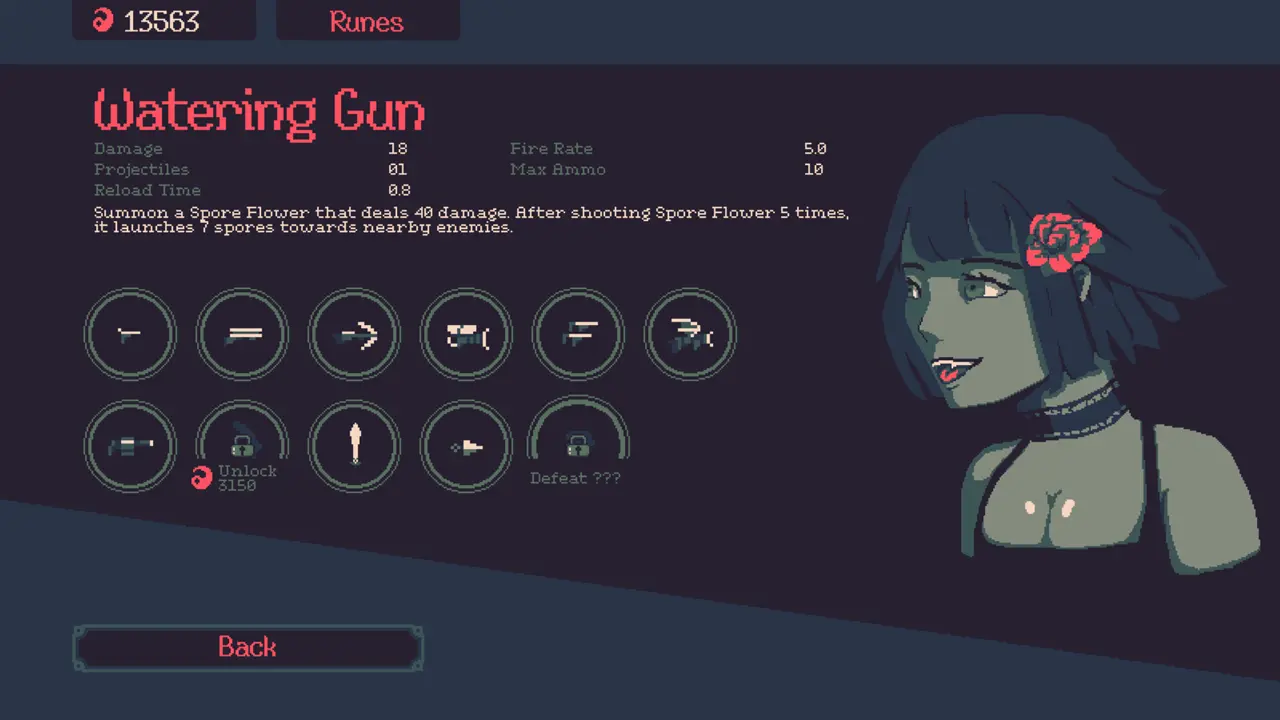
Every death earns you currency. That currency goes into unlocking new characters, each with different stat spreads and starting weapons, new guns, and runes. The rune system is the most interesting of the three. Runes offer the biggest sustained power improvements across repeated plays and are, naturally, the most expensive thing to unlock. The game knows what it's doing there.
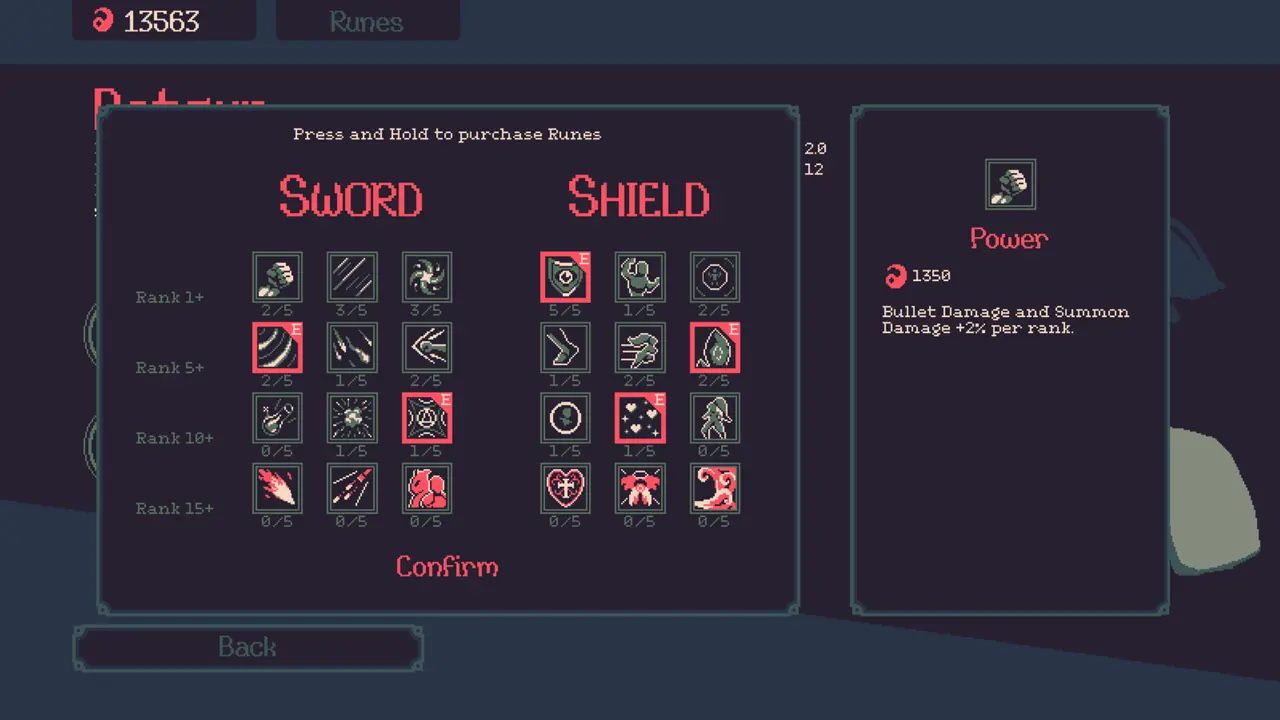
Once you start digging into builds the real depth opens up. The core question every run is whether to lean into passive upgrades (auto-damage through summoned creatures) or active ones that amplify your weapons directly. The passive route is more forgiving. The active route hits harder but demands you actually use the weapon well, and each gun plays completely differently.
The Shotgun fires a short-range spread of pellets. Point-blank it's devastating, but you have to close the gap in a game that's constantly trying to push you back. The Bat Gun fires homing bats that individually target enemies, meaning you can fling shots in a direction and let the bats do some work. These aren't just cosmetic differences. They change how you move, which enemies you prioritise, and which runes are even worth taking.
The synergy system sits on top of all this. Combine the right weapon upgrades with the right passives and you can get runs that feel completely broken in your favour, in the best way. Most synergies end up feeling functionally similar at high levels, which is a small complaint, but getting there feels like solving a puzzle under pressure. If you enjoy strategic depth in games that reward building and planning, this will scratch that itch.
The Visual Chaos Problem
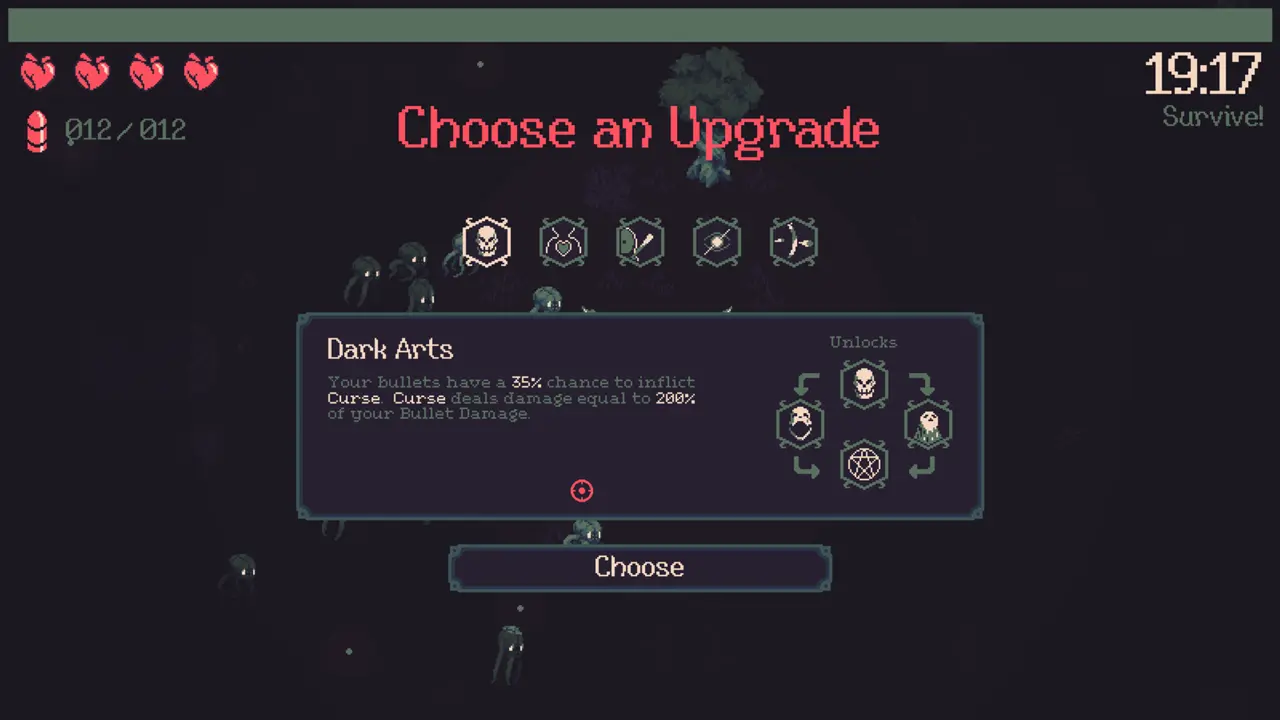
Here's where the game gets messy, not in design terms, but literally on screen. 20 Minutes Till Dawn commits hard to a monochromatic palette. Dark greens, blacks, whites, and occasional red. It looks great in screenshots. It looks like a blender in motion.
The problem is that enemies, level geometry, and your own allied creatures and spells all share the same basic colour range. My summoned dragons look like enemy projectiles. My gale-of-wind spell looks like an incoming attack. I've shot at my own buffs more times than I can count, not because I'm careless but because there genuinely isn't enough visual differentiation at speed.
This isn't just a cosmetic annoyance. Wasting shots and attention on invalid targets costs lives. In a game this punishing, losing a run because you couldn't tell friend from foe for half a second is genuinely frustrating. It's the kind of design decision that makes complete sense as a visual style choice and falls apart as a usability choice.
The developer clearly had a specific aesthetic in mind and committed to it fully. I respect the commitment. I also died to it repeatedly.
Compared to something like Brotato, which uses bright, distinct colours to make enemy types instantly readable, 20 Minutes Till Dawn is doing everything harder for itself visually. It's a genuine misstep from flanne, even if every other design decision holds up.
Is It Worth Playing in 2024?
The roguelike genre is crowded. Vampire Survivors set a template and now everyone's iterating on it. What makes 20 Minutes Till Dawn worth playing over the hundreds of bullet-heaven clones is that it actually asks something different of you. The active targeting isn't just a gimmick. It changes the entire feel of a run. It makes you responsible for your own death in a way that passive-fire games never quite manage.
The Lovecraft survival game atmosphere is also stronger than most games at this price point. The monster designs are genuinely unsettling without being campy, the sound design keeps the dread turned up, and the 20-minute time limit creates a natural tension that most roguelikes spread out over much longer sessions. Every run is compact and complete. When you die at minute 18 you feel it differently than when you die three hours into a longer game.
It's a harder recommendation than the simpler titles in the genre. It's not the roguelike you boot up to relax. But if you want something that treats you like an adult and expects you to get better, it earns its keep. The problems that come with it might lower the chance of having me come back week after week, but for a title of this scope, getting a few days of Eldritch horror survival fun is more than enough for its single-digit USD price tag.
Conclusion
20 Minutes Till Dawn is a true gem of the roguelike genre. Hard, occasionally maddening, and built with real intent. The visual chaos is a genuine flaw and the difficulty will push casual players away fast. But the core loop is tight, the meta-game keeps you coming back, and the Lovecraft survival game atmosphere rivals experiences that cost five times as much. If you bounced off Vampire Survivors because it felt too passive, this is the game that answers that complaint directly.
If you're into games that make you work for every run, have a look at P For Pistol.