Detroit: Become Human - Do the Choices Actually Matter? Review

The single biggest question anyone asks before buying Detroit Become Human is whether the choices actually matter or whether it's just another game pretending they do. Short answer: yes, they do. Longer answer follows.
Detroit Become Human choices matter review: the setup
Detroit Become Human drops you into 2038, a Detroit where androids have replaced most of the human workforce. Quantic Dream, the Paris studio headed by David Cage, built the whole game around a single premise: what does it actually feel like to live inside a branching story where your calls have real consequences?
You play as three androids. Connor is an RK800 model sent to investigate deviant android crime alongside a grumpy cop named Hank Anderson. Kara is a household android who escapes an abusive home with a young girl named Alice. Markus is a caretaker android who ends up leading a full-blown civil rights movement after his owner, the painter Carl Manfred, is killed. Three separate storylines, one city, and every decision you make can cross-contaminate the others.
I sat down expecting the usual Telltale treatment: the illusion of choice wrapped around a fixed plot. I did not get that.
Do the choices actually hold up?
This is where Detroit separates itself from most narrative games. I've played through chapters and killed Connor inside the first twenty minutes by being too aggressive in a hostage negotiation. Dead. Genuinely gone from my playthrough. The game kept moving with a replacement model and an altered relationship with Hank that I had to rebuild from scratch. That's not something Telltale ever did.
The flowchart system, which you can review after each chapter, is almost aggressively honest about showing you all the paths you didn't take. It's both satisfying and infuriating. I kept going back into chapters just to see if the variables held, and they do. Markus' ending shifts drastically depending on whether you led a peaceful protest movement or went full armed revolution. Kara can die quietly or make it across the border. Connor can be fully deactivated or become the most important android in Detroit depending on how you handle a single late-game confrontation.
That said, the writing isn't bulletproof. David Cage has a tendency to over-explain his themes, and Detroit is no exception. The android-as-oppressed-minority metaphor is laid on thick enough that it occasionally tips from pointed into blunt. Some dialogue, especially in Kara's chapters, veers into melodrama that would embarrass a daytime soap. When the acting holds up it's fine, when it doesn't you feel every fake-sounding line.
Connor, Kara, Markus: who actually works?
Connor's chapters are the best in the game by a distance. His dynamic with Hank Anderson is the most fully realised relationship Detroit has to offer, and the crime reconstruction mechanics where you piece together what happened at a scene give his sections a different texture to the other two. I genuinely cared whether Hank came around or not, which surprised me.
Markus works better as a concept than as a character. His arc is the most politically loaded and the writing leans into that so hard it sometimes loses the human (android?) moments that make Connor and Kara work. Still, the protest sequences are genuinely tense and the binary choices between peaceful and violent resistance carry real weight.
Kara is the most emotionally manipulative of the three, and that's not entirely a compliment. Her story with Alice is built to make you feel things, and it does, but it's also the most linear of the three threads. Her chapters hit harder the less you interrogate them.
Gameplay: cinematic in every sense
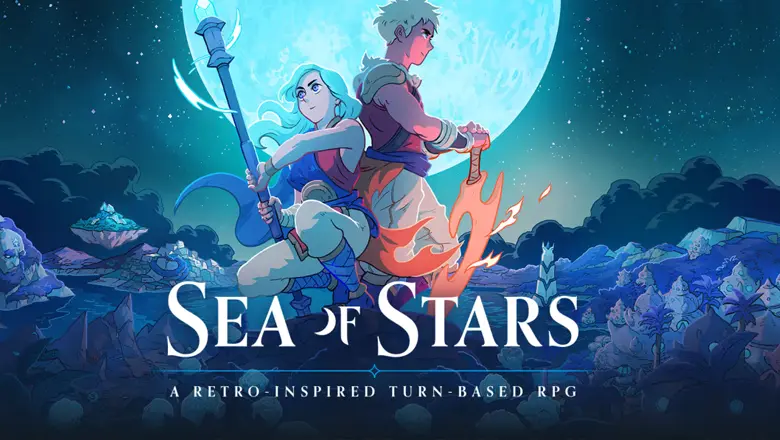
The core gameplay is essentially a walking sim with QTEs bolted on. If you're coming from something like Sea of Stars expecting actual mechanical depth, manage your expectations. You walk around environments, examine objects, reconstruct crime scenes, and occasionally mash a button not to die.
Quantic Dream knows this is a weak point and compensates hard with presentation. The sound design is excellent, the motion capture holds up, and the production values make it feel more like a prestige TV series than a game. Even the early Markus chapter where he plays the piano has this careful intimacy to it that lands better than most games manage with ten times the interactivity.
Compared to what David Cage did with Heavy Rain, Detroit is a significant step up. Heavy Rain had the branching structure but the mechanical feel was more clunky and the story had more plot holes you could walk an android through. Beyond: Two Souls was a step backwards. Detroit is where Quantic Dream finally put it together.
Visuals and replayability
Detroit shipped in 2018 and still looks genuinely good. The android character models have held up better than almost anything from that generation. Detroit's near-future version of the city itself is well-realised, full of small environmental details that reward the kind of slow exploration the game's pacing naturally encourages.
The replayability is real. I've done three full playthroughs and landed on meaningfully different endings each time. That's not something I can say about many narrative games. If you want to see all of Detroit you're looking at something like 20-30 hours minimum, which for the price this thing sits at now is ridiculous value.
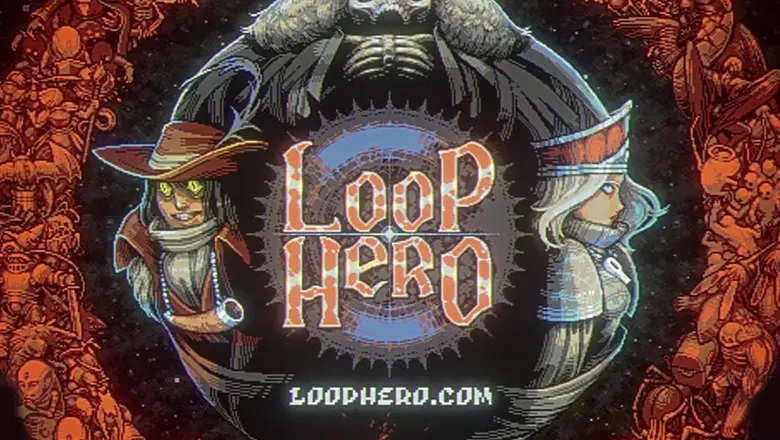
If you enjoyed Hellblade: Senua's Sacrifice for its commitment to a single driven narrative, Detroit scratches a different but related itch. And if you want to see how far you can get in a narrative game with almost no combat, Loop Hero is an interesting contrast in terms of how little a game needs to visually do to keep you in it. For something closer to Detroit's RPG DNA, Sea of Stars is worth checking out.
Conclusion
Detroit Become Human is the best thing David Cage and Quantic Dream have made. The choices matter, Connor and Hank are great, and the production values cover a lot of the writing's sins. If you're looking for a narrative game where your decisions actually change what happens, this is one of the rare ones that delivers.
If you're building your own interactive story and thinking about how narrative structure works, check out MangaPlay, the tool I'm building for exactly that kind of writing.