TLDR: Loop Hero takes away your controller and dares you to care anyway. Somehow it works, up to a point.
- 1: Card-based world-building creates strategic depth you won't see coming
- 2: Auto-combat forces you onto macro decisions instead of button mashing
- 3: Pixel art and void-rebuilding narrative fit together like they were made for each other
- 4: The metagame between runs stays confusing for longer than it should
- 5: Worth picking up, probably won't finish it, and that's OK
I've spent over 20 hours with Loop Hero and I still don't understand 15% of its systems. That's both the charm and the fatal flaw, and I'm going to sit with that contradiction for a bit, which is exactly the territory this loop hero review needs to live in.
Four Quarters released the game in 2021 and it calls itself a roguelike, but that label doesn't really do it justice. It sits somewhere between a sim, a strategy game, and an RPG, and it refuses to pick a lane. As someone who spends a lot of time thinking about game design (mostly by making games that are much smaller and considerably worse), that kind of genre-blurring either irritates me or fascinates me. Loop Hero mostly fascinated me.
Loop Hero Review: How the Auto-Battler RPG Actually Works
The pitch is this: a lich has destroyed reality. Everything is gone. Your hero wakes up in a void and just starts walking, in a loop, around and around the same path. You don't control the hero directly. You don't choose when to fight, which enemy to target, or whether to use a potion. The hero handles all of that automatically. What you control is the world around the path.
That's the whole thing. That's Loop Hero gameplay.
You draw cards (graveyard here, mountain there, meadow over there) and they reshape the path and everything spawning on it. A graveyard adds undead enemies. Mountains boost your HP. Fields spawn scarecrows if you're not careful about placement. Every card you place is a small bet: "I think I can handle what this brings." Sometimes you're right. Sometimes a scarecrow one-shots you and you've learned a lesson.
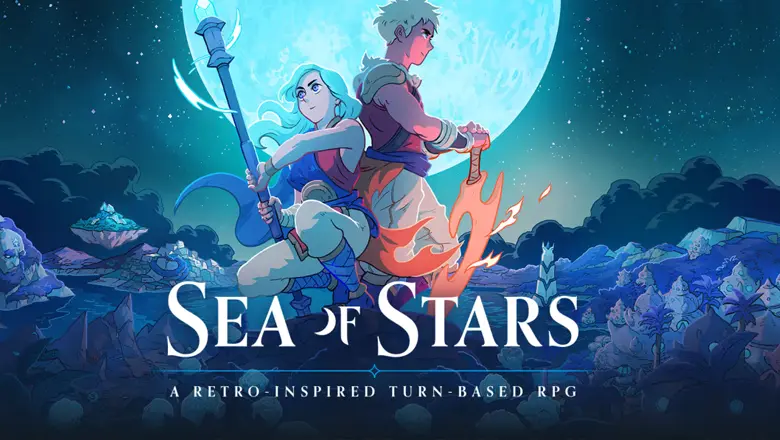
The runs themselves are tight. 20 to 30 minutes including all the auto-combat. That accessibility was the first thing that hooked me. I've been reviewing indie games for a while now and the ones with short run timers always have an advantage: they respect your time, and they make failure feel cheap rather than devastating. Sea of Stars went the opposite direction. Long, deliberate, JRPG-paced. Loop Hero is the compressed, fidgety alternative, something you can fit around a lunch break.
Card-Based World Building in This Roguelike RPG
The card system is where Loop Hero gameplay gets genuinely clever. You're not just placing terrain, you're building synergies. Mountains adjacent to each other become a rocky peak that boosts defence more than the individual tiles would. A graveyard next to a vampire mansion creates a different enemy pattern than either alone. The game doesn't explain most of this. You find it by accident, by dying, or by reading the wiki at 1am.
This discovery-by-death loop is the thing that makes it feel like a roguelike rather than just a card-placement sim. You come back with slightly more knowledge than last time. Your base camp, built between runs with resources your hero collects mid-loop, slowly unlocks new buildings, new starting bonuses, new card types. The progression is real. The sense of gradually learning the language of the game is real.
Your hero also has a gear system running in parallel to all of this. They pick up weapons, armour, and rings from enemies mid-run. You see the gear drop and decide whether to equip it. That's one of the few direct decisions you make per run, and because it's your only lever, every gear choice feels oddly weighty. Do I swap my attack-speed ring for the defence one even though the boss is three tiles away? Classic.
The Loop Hero Gameplay Experience Run to Run
Each run ends with a boss fight. Win or lose, you bank some resources, build something new at camp, and queue up the next run. The game frames this as fighting the lich repeatedly. You beat it, reality resets, you start again. That's the narrative conceit. The loop is literal.
It's a concept that sounds exhausting on paper. In practice the first few hours feel great because you're constantly unlocking something. A new card, a new building, a new class. The warrior was my starting class and honestly a fine choice: beefy, straightforward, good for learning what the cards do before you try anything fancy. The rogue came later and rewards a totally different kind of card placement. The necromancer later still, which basically inverts the whole graveyard logic you've been using.
That class variety gives the game real replay value, at least for the first 15 or so hours. Pixel art graphics designed to evoke late-1980s RPGs fit perfectly here. The void starts black and empty, and as you place cards run after run the world slowly fills in with colour. Villages, forests, blood groves. It looks like a childhood memory of an RPG, not the RPG itself. That's exactly the right aesthetic for a game about rebuilding a world from scratch.
The Metagame Clarity Problem
Here's where Loop Hero loses me a little. The metagame, that base camp between runs, never quite gets clear. Not all the way. You build structures and they unlock new card types and stats, but the downstream effects aren't always obvious. Some buildings interact in ways the game doesn't signal. Some upgrades feel important; others do nothing noticeable for three full runs. I'd place a new building, run the next loop, and genuinely not be able to tell if it had changed anything.
It's hard to know if that's a localization issue (Four Quarters is a Russian studio and the translation has a few rough edges), a deliberate design choice to push trial-and-error, or just systems that needed another pass at clarity. Probably some mix of all three. But it means the game can feel like it's speaking a language you almost understand. 85% fluency, permanent plateau.
The narrative has the same problem. The lich storyline is a framework, not a story. You defeat the lich. Reality resets. You defeat it again. Nothing changes from loop to loop in terms of world-building momentum. Outside of the base camp it all resets, which is literally the point, but it means you never get the emotional payoff of a world that actually feels saved. For a game whose whole premise is rebuilding something lost, that flatness in the story stings.
Should You Play This Roguelike RPG in 2024?
Yes, if the auto-battler RPG concept sounds interesting to you at all. The first ten hours of Loop Hero gameplay are genuinely inventive. The kind of game that makes you go "oh, I see what they're doing" and then immediately start thinking about how you'd design something similar. Which, if you're a game dev, is about the highest compliment you can give.
If you need a game with a clean narrative payoff and fully-legible systems, look elsewhere. If you want something that rewards patience, experimentation, and being fine with not understanding everything, Loop Hero delivers. I finished my runs satisfied even when I couldn't articulate why.
Conclusion
Loop Hero is the game equivalent of a puzzle box that's missing the last two pieces. Most people will put it down before the end and still walk away happy. That's a specific achievement.
If you want more indie RPG takes, check out our full Sea of Stars review. A game that plays it straight where Loop Hero plays it sideways.